
Introduction
When Kittl scaled to a global audience, the engineering team faced a growing need for reliable, high-performance testing. While Cypress had been effective initially, Kittl needed a more flexible solution to handle complex scenarios such as multiple tabs, iframes, and multi-browser coverage. This led them to migrate to Playwright—and to use Currents for visibility and orchestration.
Company Overview
Kittl is an AI-powered, browser-based design platform that combines best-in-class creative AI models with deep editing control. Founded in Berlin, Kittl quickly scaled for global use, becoming foundational to ambitious creators, designers, and businesses launching and growing brands and products.
As the product evolved to support increasingly complex design workflows and a fast-growing user base, maintaining reliability and performance became critical to ensure creators could confidently produce professional output at scale.
The Decision to Migrate to Playwright
As Kittl’s product matured, the team identified several advantages in moving from Cypress to Playwright:
- Need for Flexibility: A more adaptable framework was required to scale integration and end-to-end tests.
- Broader Browser Coverage: Playwright offered better support across multiple browsers.
- Handling Complex Scenarios: Advanced interactions, including multiple tabs and iframes, were easier to test.
- Consistent CI Setup: Playwright reduced custom tooling and worked more reliably in continuous integration pipelines.
Playwright proved to be a better fit for how our application and teams are growing.

Testing Strategy
Kittl runs a layered testing strategy with the following components:
- Unit & Integration Tests: Fast unit and integration tests in CI.
- End-to-End Tests: Validation of critical user journeys, including authentication, editor workflows, exports, and subscriptions.
- Cross-Browser & Environment Coverage: Tests run across key browsers and environments to ensure reliability at scale.
- Shared Ownership: Developers own most unit and integration tests, while QA leads the end-to-end strategy and core Playwright test suites in close collaboration with feature teams.
Kittl's primary focus involves navigating a highly interactive, canvas-heavy UI with complex asynchronous rendering. Additionally, Kittl manages critical third-party dependencies, such as payment gateways and analytics providers.
Migration from Cypress to Playwright
Our migration goal was to minimize test flakiness while optimizing runtime and signal quality as the application scales. The actual migration of test cases required careful refactoring due to the complexity of the product, shared test utilities, and the separation of test responsibilities across teams.
Approach:
The migration was incremental. Kittl started with critical user flows to validate setup and tooling before scaling.
- Key concerns & Mitigation: Concerns included team adoption, migration cost, and avoiding delivery disruption, which were mitigated through gradual rollout, shared patterns, and cross-team collaboration.
- Timeline: The migration of test infrastructure (from Cypress Cloud to Currents) took 1–2 days, while migrating test code from Cypress to Playwright took several months due to application complexity and a modular test architecture.
- Lightweight setup: The initial Playwright setup was relatively lightweight. From that point onward, all new end-to-end tests were written exclusively in Playwright.
- People involved: Contributors from multiple engineering teams participated in normal development cycles
Impact:
- Improved Flakiness Visibility: Flaky tests became easier to spot, reproduce, and discuss, although over time Kittl also encountered nuances related to Playwright’s built-in waits and retries.
- Faster CI Feedback: Parallel execution significantly reduced overall runtime, making E2E checks less blocking.
- Consistent Test Results: Quality gates and stricter failure conditions improved CI signal quality, resulting in more reliable test runs.
Currents as a migration facilitator
Currents played a critical role in the transition:
- Allowed Kittl to run Cypress and Playwright tests side by side
- Provided centralized dashboards and immediate visibility
- Prevented delays in migration while ensuring test reliability
Without Currents, we’d have had to invest more time building our own visibility and coordination layer. That extra overhead would likely have slowed adoption, made flaky-test work harder, and stretched the parallel run stage longer, because confidence would have built up more slowly.
Currents Orchestration for Playwright
Orchestration:
Currents helped distribute tests effectively across environments, branches, and pull requests, reducing CI bottlenecks. One engineer oversaw the transition independently.
Impact:
- Faster & Balanced Test Runs: Test runs became more evenly distributed. On average, the execution time of a single test was reduced by 50%, keeping CI feedback within an acceptable time window.
- Resource Efficiency: More efficient test distribution reduced idle time and unnecessary reruns, allowing CI resources to be used effectively without increasing costs.
- Improved Developer Experience: Developers gained clearer visibility into test failures, making it easier to track and debug issues, reducing CI friction, and boosting confidence in test results.
Spot Instances
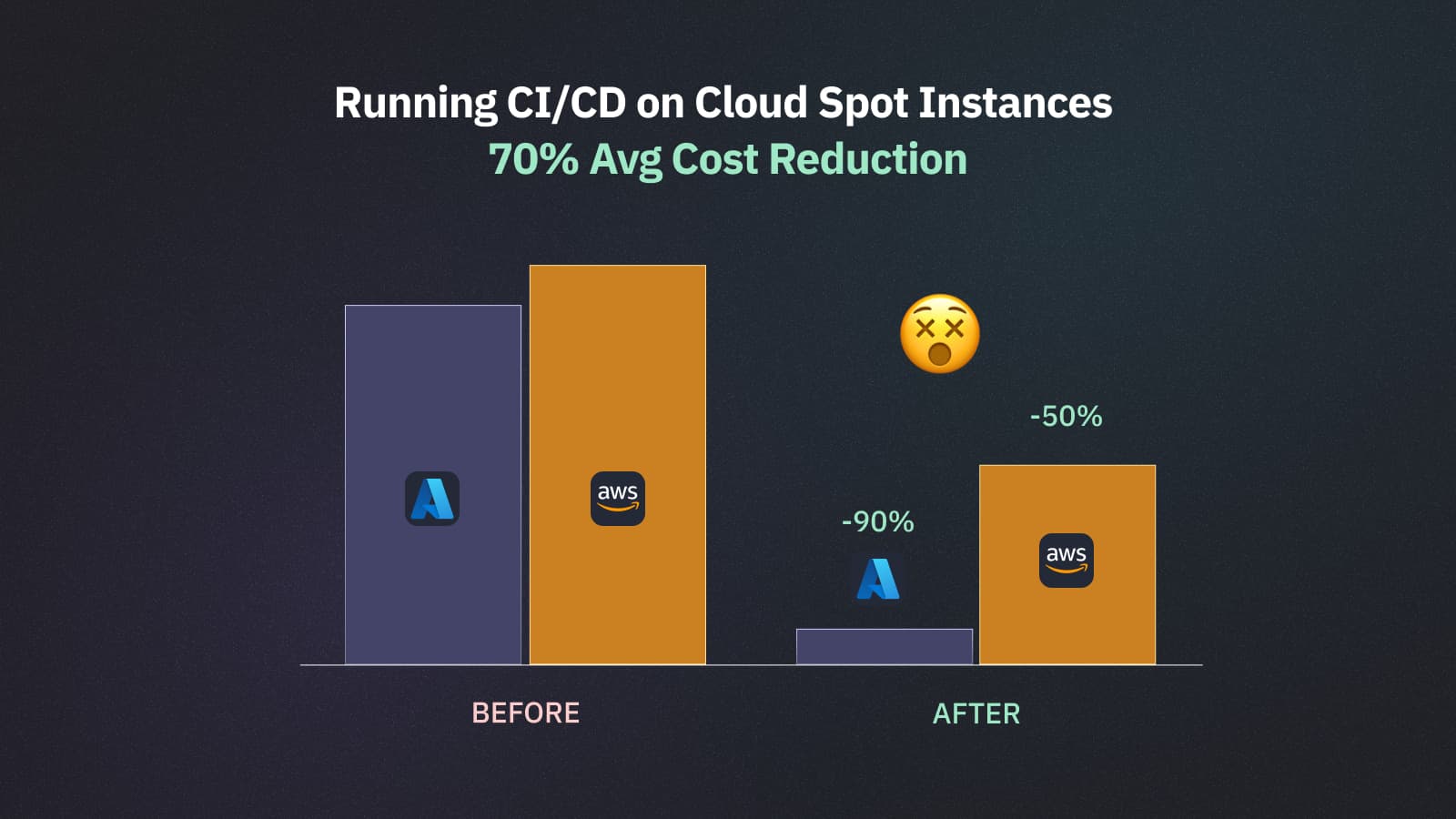
Kittl leveraged spot instances to reduce infrastructure costs by up to 80%.
- Motivation: Reduce infrastructure overhead and scale testing capacity while maintaining cost efficiency.
- Trade-offs: Occasional interruptions led to slightly longer execution times when instances were reclaimed, but the minor slowdown was outweighed by the significant cost savings.
- Cost Impact: Switching from on-demand to spot instances reduced compute costs by 60%-80%, enabling a higher volume of tests without increasing spend.
- Implementation: Setup was handled by two platform engineers using runs-on orchestration, avoiding a large-scale manual configuration and keeping the transition efficient.
Currents Dashboard & Ongoing Value
The Currents Dashboard became central to Kittl’s QA process:
The Dashboards became our main place to understand what is actually happening with E2E runs over time, not just whether a single pipeline passed or failed.
Historical trends, flaky behavior, retries, and failure patterns made it easier to prioritize test maintenance and spot regressions earlier.
In practice, the Dashboard reduced guesswork during CI failures and made discussions around test quality more fact-based.
Using tags and custom actions, the team could filter and inspect specific groups of tests quickly, and move unstable tests into quarantine without blocking the rest of the suite.
The dashboard made it easier to spot patterns, track flaky behavior, and focus maintenance efforts where they actually mattered.
Kittl also highlighted what they’d lose without Currents:
Without Currents, we would lose centralized visibility into our test runs. We’d be back to fragmented logs, making flaky tests harder to track and slowing down investigations. We would have to invest significant effort into rebuilding similar tooling and workflows internally.
Conclusion
By adopting Currents, Kittl was able to scale its end-to-end testing while maintaining clarity and reliability across a complex, interactive application. The migration from Cypress to Playwright, combined with Currents’ dashboards, orchestration, and spot instance support, provided faster CI feedback and more consistent, actionable insights into test results.
Currents helped us scale end-to-end testing while keeping results clear and actionable. It improved visibility into test runs and made CI feedback faster and more reliable for the whole team.